
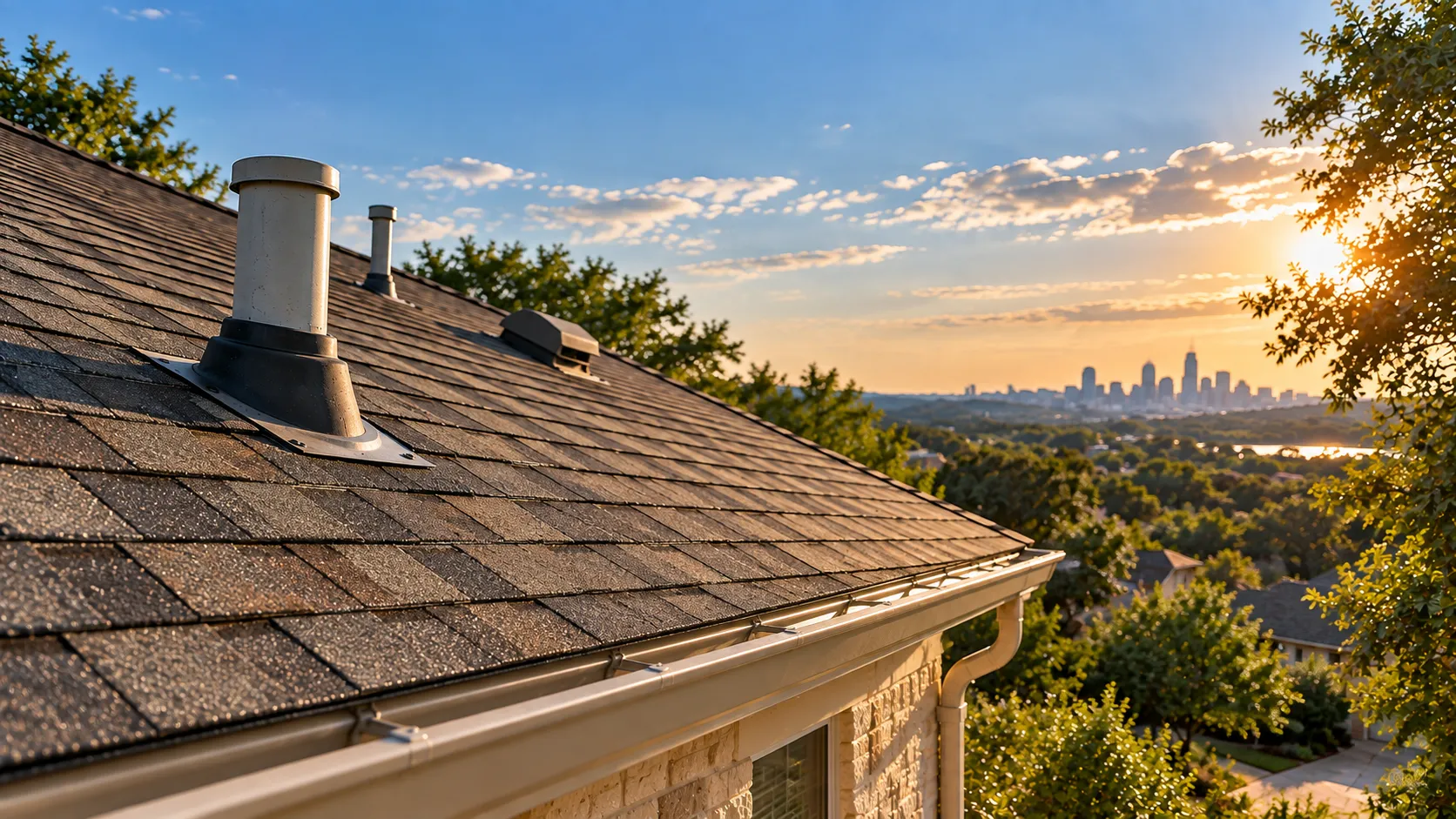
Austin summers regularly push past 100 degrees, and your roof takes the brunt of it. Shingles sit in direct sun all day, and a roof surface gets far hotter than the air around it. Winter cold and spring storms have already put stress on your roof, especially an older one. Late spring is the time to find the weak spots, before the hottest months of the year make them worse.
How Summer Heat Damages Your Roof
Heat and sunlight wear a roof down slowly, so the damage is easy to miss until it turns into a leak.
- Granule loss. The granules on asphalt shingles protect them from UV rays. As shingles age in the sun, they shed granules, and the exposed asphalt underneath breaks down faster. Granules collecting in your gutters or at the bottom of downspouts are a sign this is happening.
- Blistering and curling. Heat can cause small blisters on the shingle surface or make the edges of shingles curl up. Curled shingles are much easier for wind to lift or tear off during a summer storm.
- Expansion and contraction. Roofing materials expand in the heat of the day and contract as they cool at night. A sudden afternoon thunderstorm on a hot roof makes that swing even sharper. Over time, this movement loosens nails, cracks shingles, and opens gaps around flashing.
Check Your Sealants and Pipe Boots
The rubber and sealants that waterproof the openings in your roof dry out in the Texas sun. Rubber pipe boots around plumbing vents crack and split, and the caulk around flashing, vents, and skylights shrinks and pulls away. These are some of the most common leak sources we repair in Austin, and they’re covered in more detail in our Austin roof repair guide.
You can’t always see this damage from the ground. It’s one of the main things a roofer checks during an inspection.
Make Sure Your Attic Is Ventilated
Your roof takes heat from both sides. Sun bakes the shingles from above, and a poorly ventilated attic traps hot air that cooks them from below. A hot attic also makes your air conditioner work harder to keep the house cool.
Signs your attic ventilation may not be keeping up:
- The attic feels extremely hot even in the morning
- Your upstairs rooms stay hot no matter how the thermostat is set
- Shingles are aging faster than they should for their age, with curling or granule loss on a younger roof
A roofing contractor can tell you whether your roof has enough intake and exhaust vents for the size of your attic.
Look for Damage From the Ground
You can spot a lot without climbing a ladder. Walk around your house and look for:
- Loose, missing, cracked, or curling shingles
- Bare or dark patches where granules have worn away
- Animal, tree, or storm damage to shingles or flashing
Damaged shingles compromise the integrity of your roof and may let water in. They also make it more likely that the shingles next to them will be damaged too. Inside, check your ceilings and walls for water stains, which mean your roof needs roof leak repair now.
Don’t Forget Summer Storms
Heat isn’t the only threat. May is typically one of the wettest months of the year in Austin, and summer brings sudden thunderstorms with heavy rain and high winds. Clean gutters and clear downspouts keep that water moving off your roof instead of backing up under the shingles. Our spring rain season guide covers storm prep step by step.
Schedule an Inspection Before the Heat Peaks
Small problems like a cracked pipe boot or a few curled shingles are quick, inexpensive repairs. Left through a full Austin summer, they can turn into water damage, rotted decking, and a much bigger bill.
Call J-Conn Roofing at (512) 479-0510 for a free roof inspection and a detailed estimate for any repairs, maintenance, or roof replacement your roof needs.