
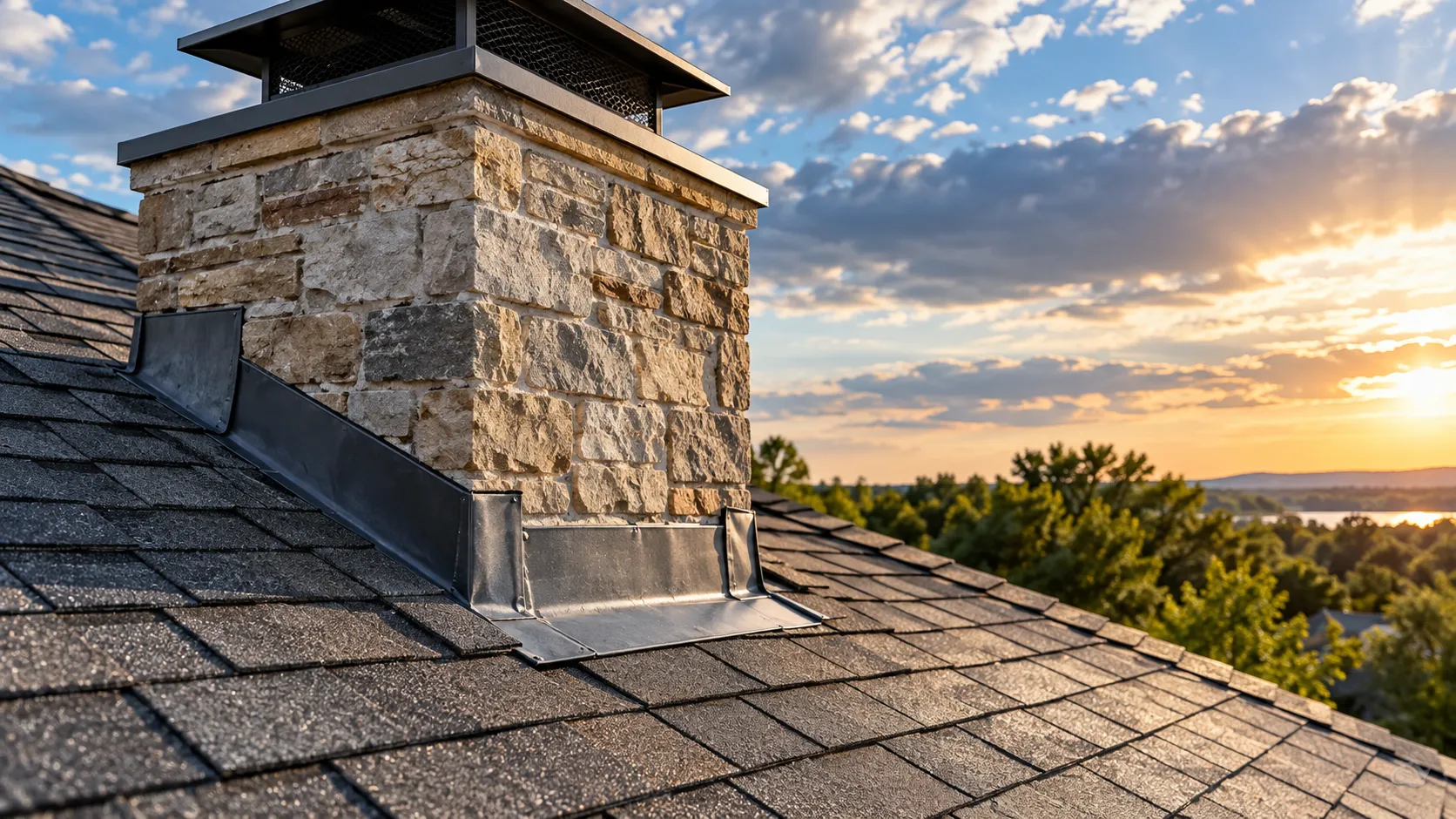
A chimney is one of the most leak-prone spots on any roof. It’s a large opening where brick or siding meets shingles, and the only thing keeping water out is the flashing sealed around it. When that flashing bends, cracks, or separates, water seeps into the attic and the ceiling below. In Austin, summer heat dries out sealants and sudden downpours test every seam, so chimney leaks are a repair we handle often.
Why Chimneys Leak
Most chimney leaks come from one of these sources:
- Failed flashing. Metal flashing is layered around the base of the chimney. Step flashing is woven in with the shingles, and counter-flashing is set into the brick and laps over it. If either piece loosens, rusts, or was installed wrong, water gets behind it.
- Dried-out sealant. The caulk and sealant along the flashing shrink and crack over time, especially in Texas heat.
- Water pooling behind the chimney. On the uphill side of a wide chimney, water and debris collect where they can’t drain. Building code calls for a cricket, a small peaked diverter that sheds water around the chimney, on chimneys wider than 30 inches. Many older homes don’t have one.
- Masonry problems. A cracked chimney crown, a missing chimney cap, or porous brick and mortar can let water into the chimney itself. That kind of leak can look like a roof leak but needs a different fix.
Step 1: Check the Ceiling Below the Chimney
Start inside your house, at the ceiling where the chimney comes into the room.
- Look for stains or sagging.
- Feel for moisture or crumbling plaster, drywall, or ceiling tiles.
Moisture is a pretty good sign that you have a leak, but you’ll need to investigate further before you can say the leak is coming from your chimney.
Step 2: Inspect the Attic Around the Chimney
Next, head up into the attic and check two spots: the attic floor where the chimney passes down into your home, and the attic ceiling where the chimney enters from the roof.
- Look for stains, rotten wood, mold, or mildew.
- Feel the areas to see if they are damp.
If the moisture is on the roof decking around the chimney, the flashing is the likely cause. If the brick of the chimney itself is wet inside the attic, water may be getting in through the top of the chimney.
Step 3: Get a Professional Chimney Leak Inspection
Don’t climb onto the roof yourself. A professional roofing company like J-Conn Roofing will come out and perform a free roof inspection. Our team will safely inspect the flashing around the chimney, looking for worn or missing caulk, cracks, rust, and broken or missing pieces. You’ll get a detailed estimate of what’s needed to repair the leak.
What Chimney Leak Repair Involves
The right repair depends on what we find:
- Resealing. If the flashing is in good shape and only the sealant has failed, cleaning out the old caulk and resealing the joints may be enough.
- Reflashing. If the flashing is rusted, bent, or installed wrong, it needs to be replaced. That means removing the shingles around the chimney, installing new step flashing and counter-flashing, and replacing the shingles.
- Adding a cricket. If water is pooling behind a wide chimney, building a cricket stops the problem at its source.
- Repairing damaged decking. If the leak has been going on for a while, the wood decking around the chimney may be rotted and need to be replaced before the new flashing goes on.
If the problem turns out to be the chimney crown, cap, or masonry, we’ll tell you so you can call a chimney specialist, and we won’t sell you a roof repair you don’t need.
Call J-Conn Roofing
If you find stained or sagging ceilings and suspect a chimney leak, call J-Conn Roofing at (512) 479-0510 for a free roof inspection and estimate for chimney roof leak repair anywhere in the Greater Austin Area.